Wind-Resistant LED Sports Lights for Metal Halide Retrofit Projects
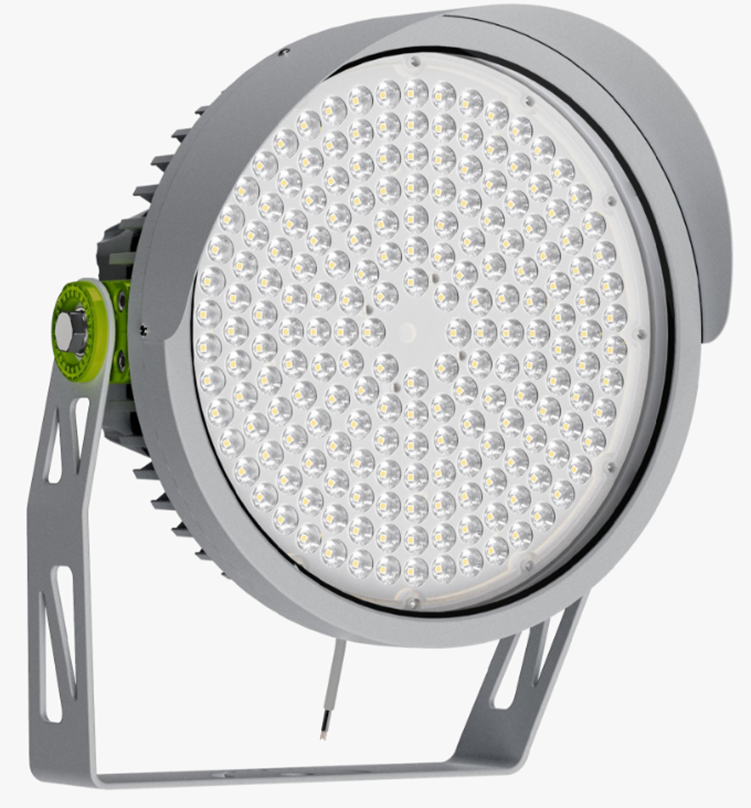
Outdoor sports facilities in exposed locations require lighting fixtures that can withstand demanding weather conditions while maintaining stable illumination. When replacing Metal Halide floodlights, LED sports lights should be evaluated not only for energy efficiency but also for housing construction, mounting flexibility, surge protection, and wind exposure.
LED Sports Lights for Metal Halide Retrofit
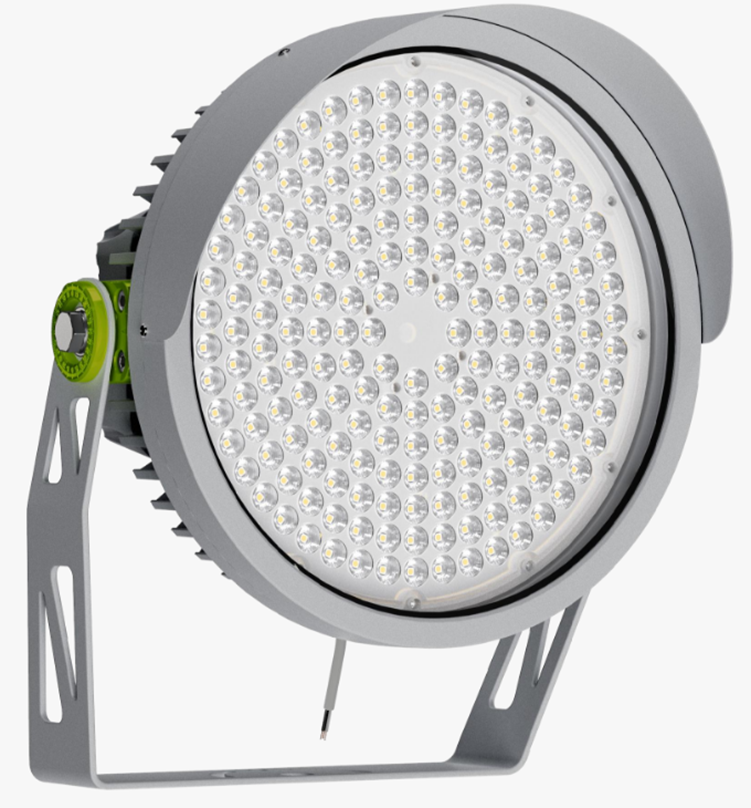
The FORTOMO 41SL is a high-output LED sports light available in 300W, 400W, and 500W configurations, producing up to 75,000 lumens with luminous efficacy of 150–170 lm/W .
For a Metal Halide to LED sports lighting retrofit , the existing pole height, fixture positions, field dimensions, and wind exposure should be considered when selecting the replacement fixture. A professional lighting calculation can also determine the appropriate fixture quantity and beam distribution.
41SL for Exposed Outdoor Sports Facilities
The 41SL features a durable aluminium housing and airflow-based thermal design for outdoor sports applications. Its IP66 protection helps protect the fixture against rain, dust, and other environmental exposure.
The fixture also supports 10kV/20kV surge protection options , which can provide additional protection for outdoor installations exposed to electrical surges and lightning-related conditions.
For high-wind locations, however, the complete installation should be evaluated, including the light fixture, mounting bracket, pole structure, fixture orientation, and project-specific wind loads.
Flexible Optics for Sports Lighting
The 41SL offers NEMA2–NEMA6 optics and beam angles from 7° to 45° , including 7°, 15°, 25°, 35°, and 45° options. This allows lighting designers to select suitable distributions according to mounting height and field layout.
For LED sports lighting retrofit projects , selecting the correct beam angle can help direct light toward the playing area while reducing unnecessary light spill. The 41SL also provides UGR <19 and no-flicker operation for comfortable visual conditions.
Key 41SL Features
- 300W, 400W and 500W configurations
- 45,000–75,000 lm output
- 150–170 lm/W efficacy
- NEMA2–NEMA6 optics
- 7°–45° beam options
- IP66 protection
- 10kV/20kV surge protection options
- UGR <19
- 3000K–6000K CCT options
- 0–10V, PWM, DALI and DMX512 controls
- 360° adjustable mounting
- Up to 100,000 hours rated life
- Removable driver box
Wind-Resistant LED Sports Lighting Design
Choosing a wind-resistant LED sports light involves more than the fixture itself. For stadiums, football fields, tennis courts, and other exposed sports facilities, engineers should consider local wind conditions, mounting height, pole capacity, fixture EPA, bracket strength, and installation orientation.
For projects referencing standards such as AS/NZS 1170.2 , the complete lighting installation should be assessed according to the applicable project requirements rather than assuming fixture compliance alone.
Global Metal Halide Replacement Projects
The 41SL combines high-output LED performance, flexible beam distributions, outdoor protection, and adjustable mounting for a wide range of sports lighting applications. It provides a practical option for Metal Halide replacement sports lights in exposed outdoor facilities.
For global sports lighting contractors, distributors, and project developers, the 41SL can be specified for stadiums, football fields, training grounds, tennis facilities, and other outdoor sports lighting retrofit projects where reliable performance and appropriate wind-load design are important.