Troubleshooting Outdoor LED Sports Light Issues in Harsh Climates
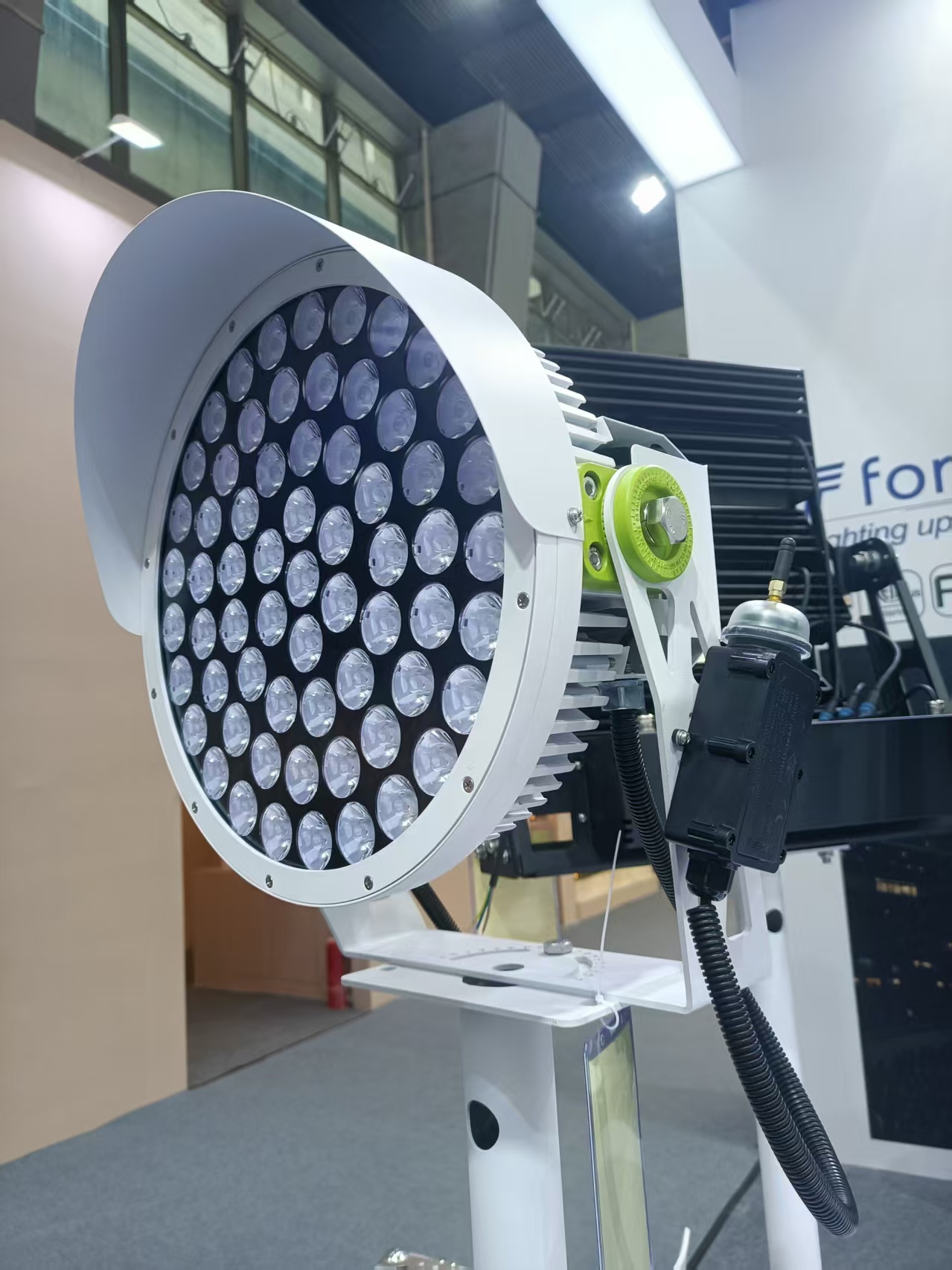
Outdoor LED sports lights operate in demanding environments where heat, humidity, rain, UV exposure, dust, and electrical surges can affect long-term performance. Proper fixture selection, installation, and maintenance can help reduce common lighting problems in stadiums and sports facilities.
Common LED Sports Light Problems
Several issues can occur when outdoor sports floodlights are not correctly specified or installed:
- Flickering or intermittent operation: May be related to power supply, driver connections, or voltage fluctuations.
- Overheating: Insufficient heat dissipation or excessive ambient temperature can affect LED and driver performance.
- Water or moisture ingress: Inadequate protection, damaged seals, or incorrect installation can lead to moisture entering the fixture.
- Uneven lighting: Incorrect beam angles, fixture positioning, or aiming can cause poor uniformity.
- Premature component failure: Electrical surges, high temperatures, and unsuitable components can shorten service life.
41SL Design for Outdoor Environments
The FORTOMO 41SL is available in 300W, 400W, and 500W configurations, producing 45,000–75,000 lumens with up to 150–170 lm/W efficacy.
Its IP66 protection helps protect the fixture against dust and water exposure. Optional 10kV/20kV surge protection can provide additional protection in areas exposed to electrical disturbances or lightning activity.
For high-temperature or strong-sunlight locations, correct fixture installation and adequate ventilation around the luminaire are important for maintaining effective thermal performance.
UV and Thermal Protection
The 41SL can be configured with a tempered glass front cover , providing strong UV resistance for outdoor installations exposed to intense sunlight.
For harsh climates, the combination of suitable materials, IP protection, surge protection, and effective heat dissipation can help reduce common maintenance issues.
Check the Lighting Design
Not every lighting problem is caused by the fixture itself. Before replacing equipment, contractors should check:
- Power supply and driver connections.
- Surge protection and grounding.
- Fixture seals and cable entries.
- Mounting position and ventilation.
- Beam angle and aiming direction.
- Photometric results and lighting uniformity.
Key 41SL Features
- 300W / 400W / 500W
- 45,000–75,000 lm
- 150–170 lm/W
- IP66 protection
- Optional tempered glass front cover
- Strong UV resistance
- Optional 10kV/20kV surge protection
- 7°–45° beam options
- UGR <19
- 3000K–6000K CCT
- 0–10V, PWM, DALI and DMX512 controls
Global Outdoor Sports Lighting
For stadiums, football fields, cricket grounds, tennis courts, and other outdoor facilities, troubleshooting should begin with the power system, installation, environmental conditions, and lighting design .
The 41SL provides a durable and configurable option for global outdoor LED sports lighting projects , including installations in hot, humid, high-UV, and demanding outdoor environments.