Multi-Wattage LED Sports Floodlights For Metal Halide Retrofit Projects
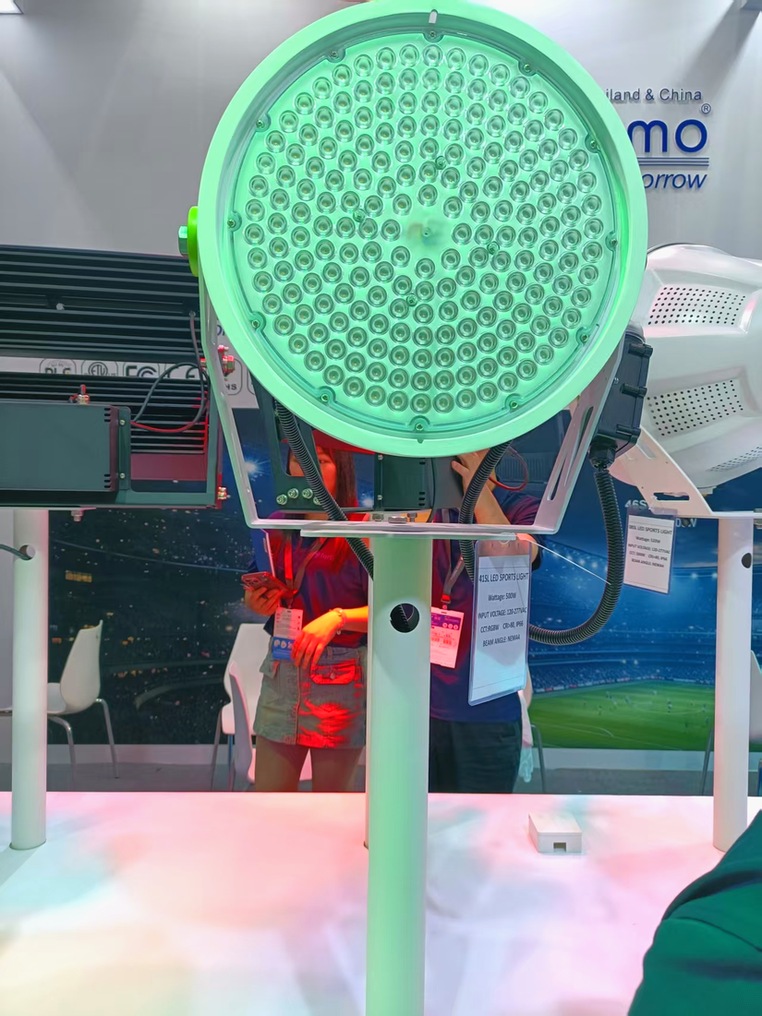
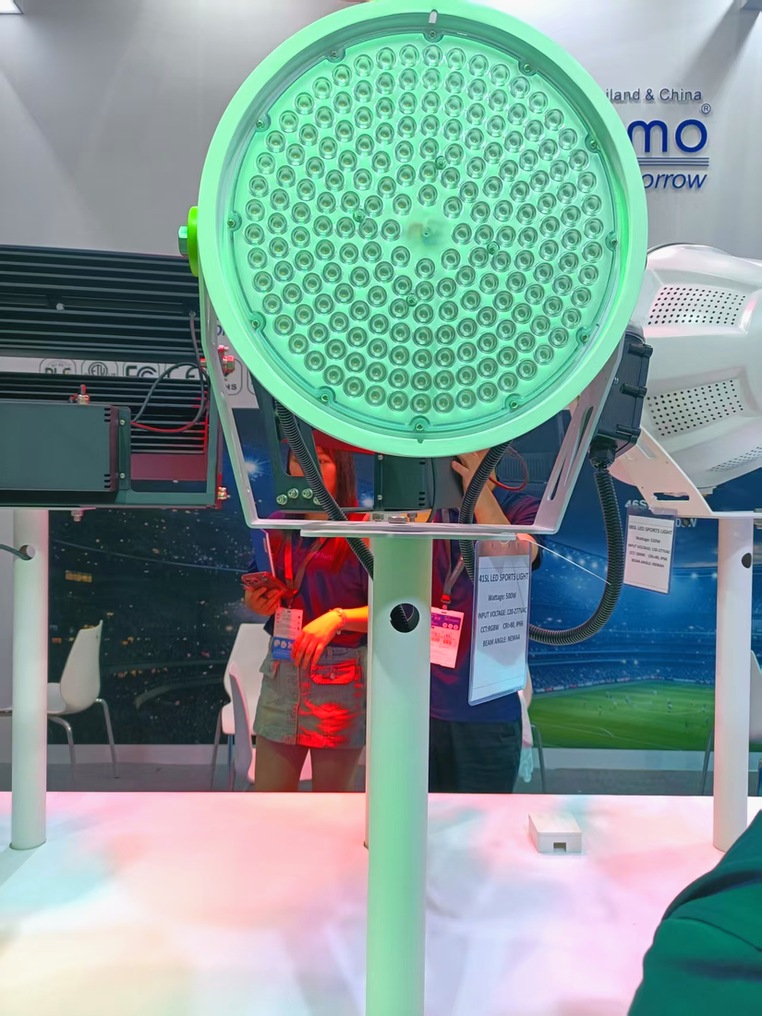
Replacing metal halide floodlights with LED is not simply a matter of matching the original wattage. Stadium and sports lighting contractors need to consider existing mast positions, mounting height, beam distribution, required illuminance and electrical infrastructure when selecting replacement luminaires.
The FORTOMO 46SL LED high mast floodlight provides multiple power options from 500W to 1500W , making it suitable for large sports lighting retrofit projects where different output levels are required.
500W–1500W LED Options for Retrofit Projects
The 46SL range includes 600W, 1000W and 1500W configurations , producing approximately 90,000 lm, 150,000 lm and 225,000 lm respectively, with a stated efficacy of 140–170 lm/W .
This multi-wattage approach allows contractors to select LED output according to the existing installation rather than using one fixture specification for every area.
Typical applications include:
- Football stadiums
- Rugby grounds
- Athletics facilities
- Large training grounds
- Outdoor arenas
- High-mast sports fields
- Multi-sport venues
The final fixture quantity and wattage should always be confirmed through a professional photometric calculation.
LED Replacement for Metal Halide Floodlights
Older metal halide systems can have high electrical consumption and require periodic lamp and ballast maintenance. An LED retrofit can provide higher luminous efficacy, longer rated life and more flexible lighting control.
The 46SL is rated for 100,000 hours and is supplied with a 5-year warranty . It uses a constant-current LED driver and supports driver options including Mean Well and Inventronics .
Actual energy savings depend on the existing metal halide system, operating hours and the final LED lighting design.
Multiple Beam Angles for Existing High Masts
One of the most important considerations during a metal halide-to-LED conversion is optical distribution. Existing floodlights may have been designed around different beam patterns, so simply replacing them one-for-one may not provide the desired illumination.
The 46SL offers 10°, 15°, 20°, 40°, 60° and 90° beam angles .
Narrow beams can be used for longer projection distances from high masts, while wider beams can provide broader coverage for areas closer to the lighting columns. A combination of optics can be specified according to the stadium layout.
Retrofit Around Existing Lighting Columns
Where existing masts remain structurally suitable, LED replacement can potentially reduce the need for major civil work.
Before installation, contractors should assess:
- Existing mast height and condition
- Floodlight mounting positions
- Wind loading
- Electrical supply
- Existing cable infrastructure
- Required lux and uniformity
- Beam angle and aiming direction
The 46SL features a low-EPA design for high wind resistance , which can be valuable for exposed outdoor high-mast applications. Its aluminium construction also uses a powder-painting process for corrosion resistance.
Outdoor Protection and Surge Protection
Sports floodlights installed on tall outdoor columns are exposed to rain, wind and electrical transients. The 46SL provides IP66 protection , a 20kV surge protection rating and an operating ambient temperature of up to 45°C .
These features make the luminaire suitable for demanding outdoor sports and high-mast environments.
Dimmable LED Floodlights for Sports Facilities
A retrofit can also introduce modern lighting controls that were not available with conventional metal halide systems.
The 46SL supports 0–10V, PWM, DALI, DMX512 and Synapse control options.
This allows compatible installations to create different lighting settings for training, competition, maintenance and other operating conditions.
Standardised Supply for Multi-Project Contractors
For contractors managing multiple sports lighting upgrades, using a product family with several wattages and optical options can simplify procurement and replacement planning.
The 46SL combines 600W–1500W output options, 140–170 lm/W efficacy, six beam-angle choices, IP66 protection, 20kV surge protection and multiple control interfaces .
For metal halide retrofit projects, contractors can select the appropriate 46SL configuration based on the existing mast layout and required lighting performance rather than relying on a simple watt-for-watt replacement.
LED Sports Lighting Retrofit Worldwide
A successful metal halide-to-LED conversion should start with an assessment of the existing installation, followed by photometric modelling and fixture selection. This approach can help determine whether existing poles can be retained and which LED wattage, beam angle and aiming position are most suitable.
With its multi-wattage configurations and flexible optics , the FORTOMO 46SL provides a practical platform for stadium lighting upgrades, high-mast floodlight replacement and large sports facility retrofit projects worldwide .