
LED Sports Lights for Tennis Court Retrofit Using Existing Poles
Why Retrofit LED Stadium Lights?
In recent years, the conversation surrounding energy efficiency in sports venues has intensified. With increasing operational costs and environmental concerns, many facilities are looking for sustainable solutions that don’t compromise on performance. One of the most effective ways to achieve this is through the reuse existing poles and retrofit with modern LED stadium lights. This strategy not only helps in cutting down on waste but also enhances the overall lighting quality.
Replacing Metal Halide tennis court floodlights with LED technology does not always require replacing the existing poles. With the right fixture size, mounting method, beam angle, and photometric design, existing poles can often be evaluated for reuse, helping reduce structural and installation work.
41SL for Tennis Court LED Retrofits
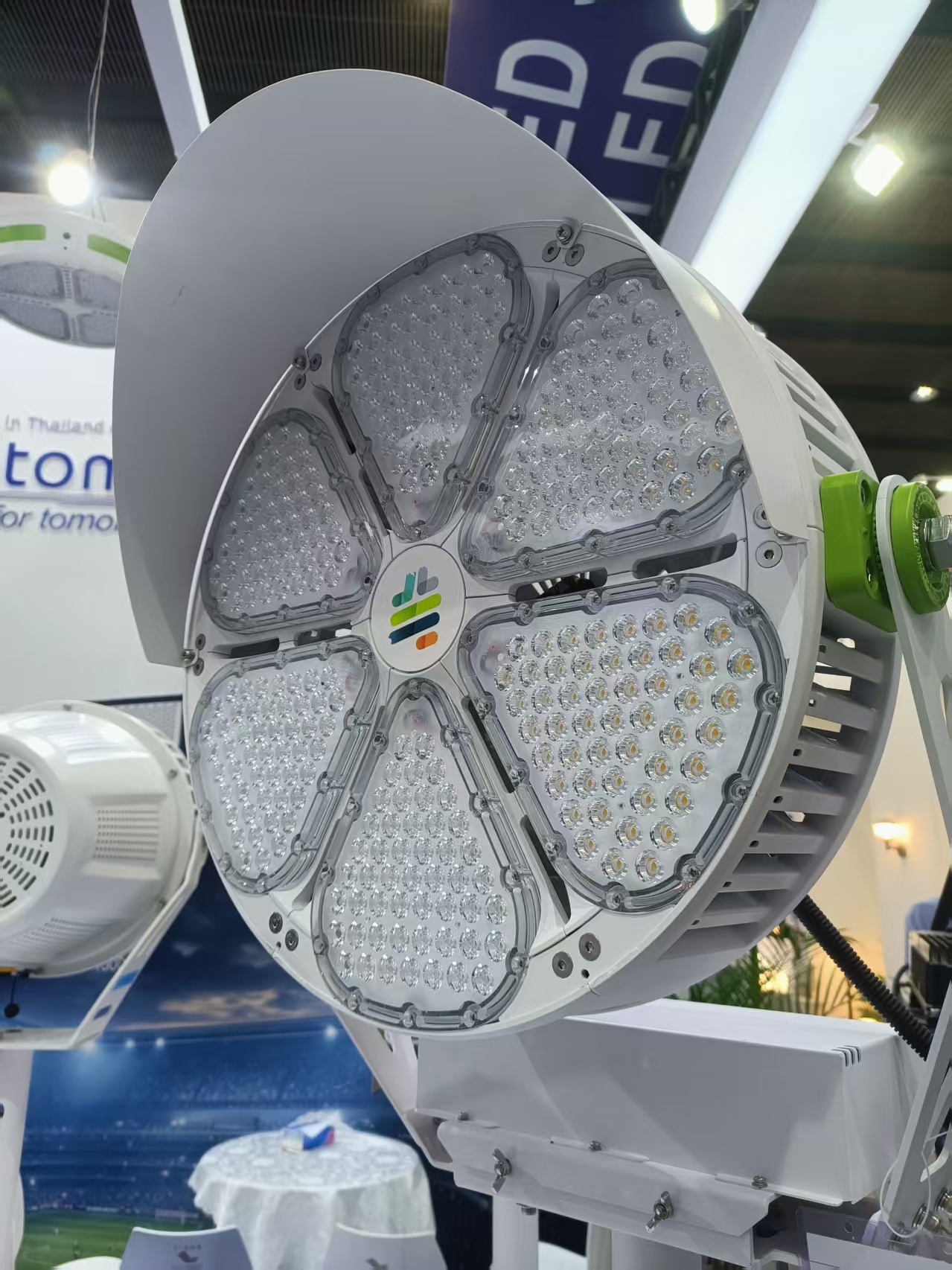
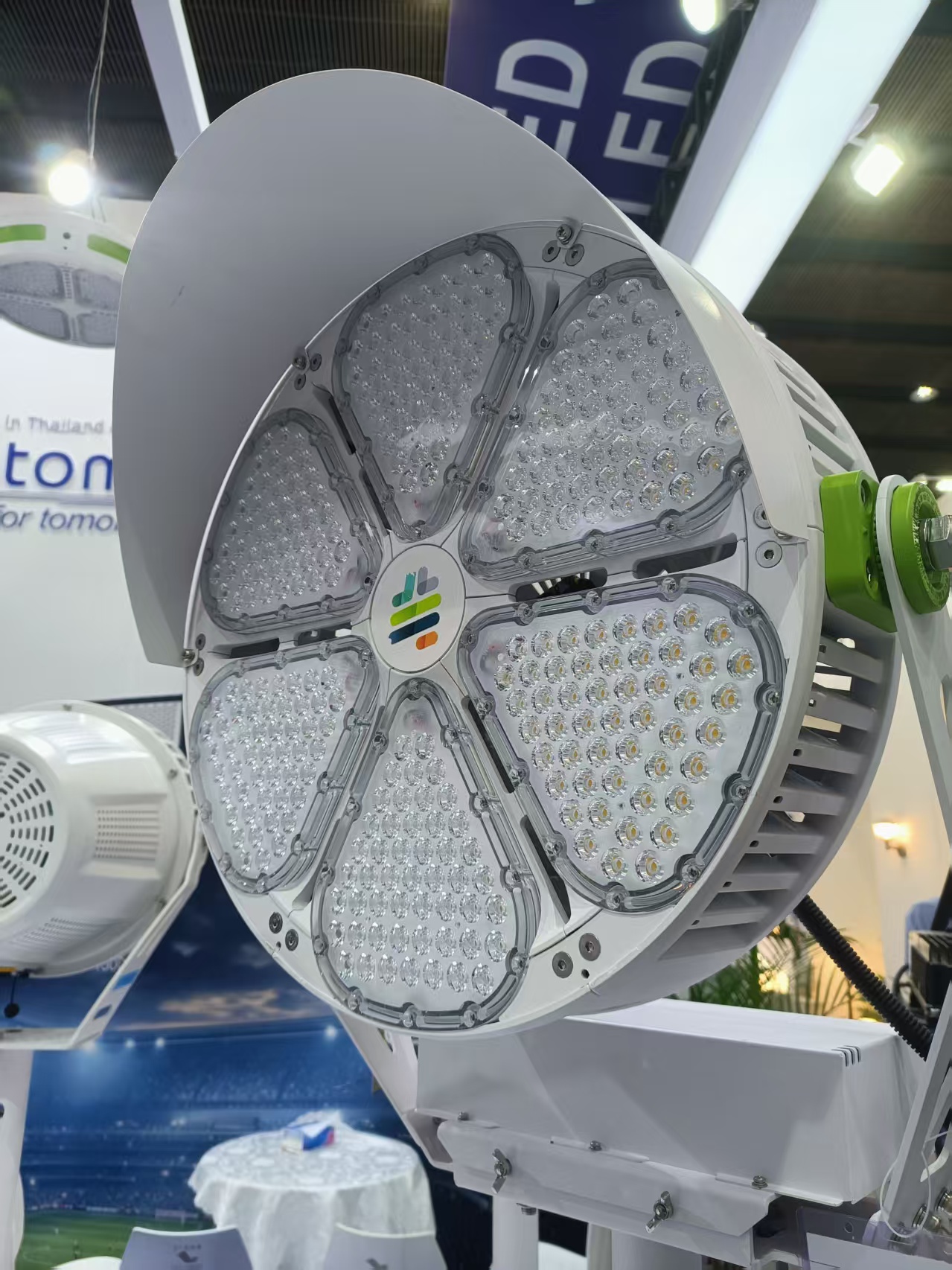
The FORTOMO 41SL is a high-output LED sports light available in 300W, 400W, and 500W configurations, producing 45,000–75,000 lumens with luminous efficacy of 150–170 lm/W .
For a Metal Halide to LED tennis court retrofit , the existing pole height, fixture locations, mounting brackets, and structural capacity should be checked before selecting the LED replacement. A photometric calculation can then determine the appropriate wattage, quantity, beam angle, and aiming position.
Reuse Existing Poles with Flexible Mounting
The 41SL features 360° adjustable mounting , providing flexibility when replacing existing sports floodlights. This can help installers adjust the fixture orientation to match the existing pole arrangement and direct light toward the court.
However, reusing existing poles should always be based on the actual structural condition, loading requirements, fixture weight, mounting hardware, and local engineering requirements.
Multiple Beam Angles for Tennis Courts
The 41SL supports NEMA2–NEMA6 optics with beam options from 7° to 45° , including 7°, 15°, 25°, 35°, and 45°.
This allows lighting designers to match the optical distribution to pole height and court layout. Narrower beams can help project light from higher poles, while wider beams can provide broader coverage where appropriate.
Correct beam selection can improve uniformity and help reduce unnecessary light spill around residential or neighboring areas.
Low-Glare LED Tennis Court Lighting
Tennis players need comfortable visibility when tracking fast-moving balls. The 41SL is designed with UGR <19 and no-flicker operation, supporting comfortable visual conditions for sports applications.
Its IP66 protection also makes it suitable for outdoor tennis courts exposed to rain, dust, and changing weather conditions.
Key 41SL Features
- 300W / 400W / 500W options
- 45,000–75,000 lm output
- 150–170 lm/W efficacy
- UGR <19
- NEMA2–NEMA6 optics
- 7°–45° beam options
- IP66 protection
- 10kV/20kV surge protection options
- 360° adjustable mounting
- 3000K–6000K CCT
- 0–10V, PWM, DALI and DMX512 controls
- Up to 100,000 hours rated life
- Removable driver box
Cost-Effective Metal Halide Replacement
Reusing suitable existing poles can potentially reduce the scope of a tennis court LED lighting upgrade , particularly where the pole structure and electrical infrastructure remain serviceable.
The 41SL's different power levels and beam distributions allow contractors to design a replacement system around the existing installation rather than applying a standard one-size-fits-all configuration.
For global sports lighting contractors, distributors, and facility operators, the 41SL provides a practical option for LED tennis court retrofits, Metal Halide replacement projects, and existing-pole sports lighting upgrades .