Multi-Sport Complex Metal Halide to LED Retrofit with High-Output Sports Floodlights
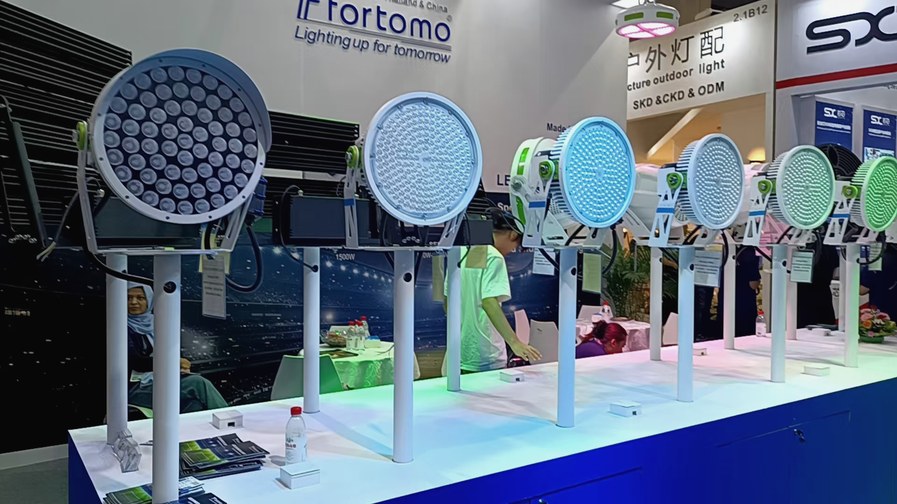
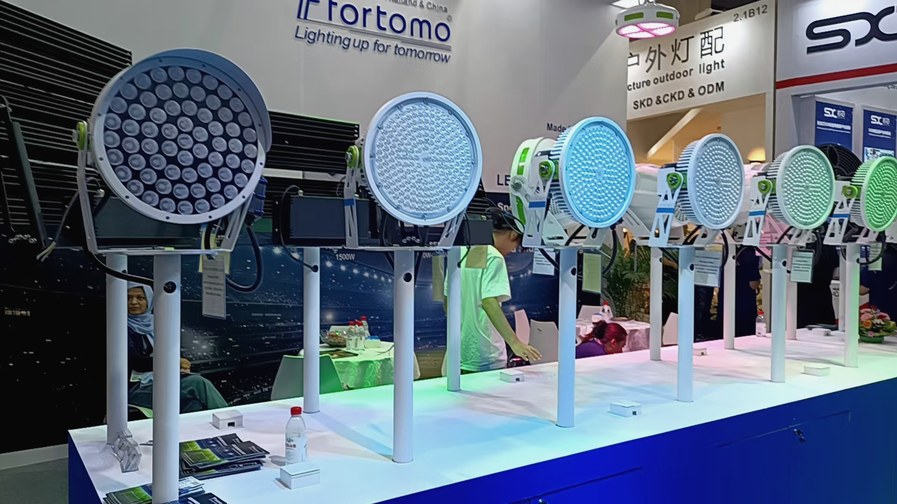
Multi-sport complexes often require reliable lighting for football, tennis, training fields, and other outdoor activities. When traditional Metal Halide fixtures reach the end of their service life, replacing them with high-output LED sports floodlights can improve energy efficiency, lighting control, and long-term maintenance.
Why Retrofit Metal Halide Lighting with LED?
A Metal Halide to LED sports lighting retrofit can reduce power consumption while providing instant-on illumination, consistent light output, and longer service life. Unlike conventional discharge lamps, LED sports floodlights do not require warm-up time and can support modern dimming and smart-control systems.
For multi-sport facilities, the retrofit should consider existing pole heights, fixture positions, field dimensions, required lux levels, and beam distribution rather than simply matching the wattage of the existing Metal Halide lamps.
40SL High-Output LED Sports Floodlight
The FORTOMO 40SL is a 500W–750W high-output LED sports floodlight designed for outdoor sports and floodlighting applications. It is available in 500W, 600W, and 750W versions, with luminous efficacy of 150–170 lm/W.
The fixture offers multiple optical configurations, including NEMA2–NEMA4 and 15°, 25°, 35°, and 45° beam options. This allows lighting designers to select a suitable distribution according to mounting height and playing-area dimensions.
For a multi-sport complex LED lighting retrofit , different beam angles can also be used to address different areas of the facility, helping concentrate light on the playing surface instead of unnecessarily illuminating surrounding areas.
Designed for Long-Term Sports Lighting
The 40SL uses cold-forged AL1070 aluminium for heat dissipation and features a removable driver box to simplify maintenance. Its 360° rotatable mounting design provides flexibility during installation and aiming.
The fixture is IP66 rated for outdoor environments and offers 10kV/20kV surge protection options. Intelligent control options include 0–10V, PWM, DALI, DMX512, and Synapse. The rated life is up to 100,000 hours, with 5-, 7-, and 10-year warranty options available.
LED Retrofit for Multi-Sport Facilities
A professional LED sports lighting retrofit solution should combine the right fixture power with appropriate optics and aiming positions. For football pitches, tennis courts, training grounds, and community sports facilities, lighting calculations can help determine the required number of fixtures, mounting positions, average illuminance, and uniformity.
With its 500–750W output, multiple beam options, IP66 protection, and smart-control compatibility, the 40SL provides a flexible solution for Metal Halide replacement sports lighting and new multi-sport complex projects.
For global sports lighting contractors, distributors, and project developers, high-output LED floodlights such as the 40SL can provide a practical platform for upgrading existing sports facilities to modern, controllable LED lighting.