Low Spill LED Stadium Lights for Residential Area Metal Halide Retrofit Projects
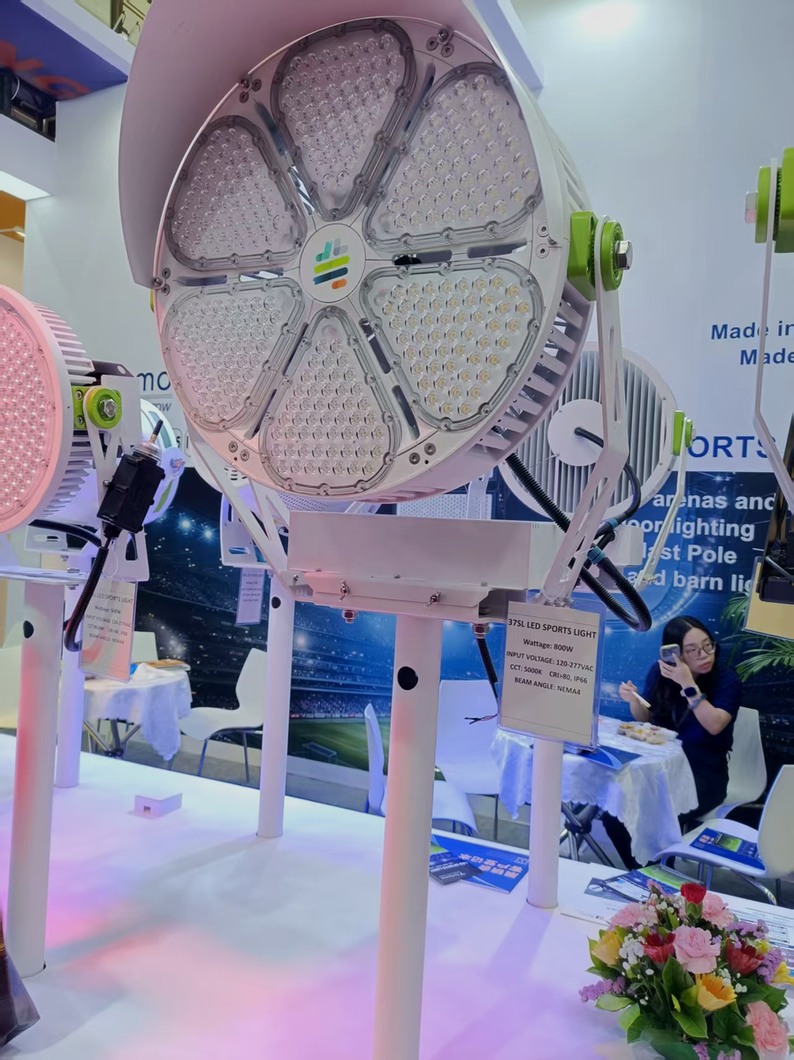
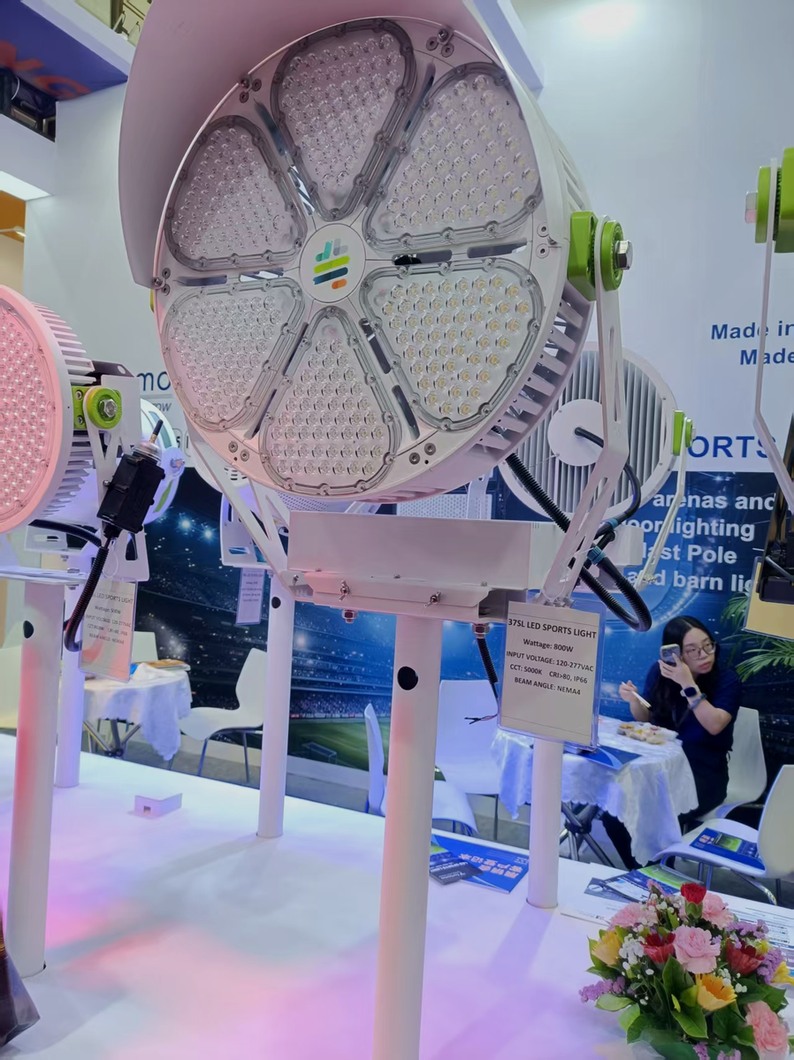
Sports facilities located near homes, apartments, and residential communities need more than high-output lighting. They also require effective control of glare and unwanted light spill. Low spill LED stadium lights provide a practical solution for replacing traditional Metal Halide floodlights while improving energy efficiency and light distribution.
LED Retrofit for Metal Halide Stadium Lighting
The FORTOMO 40SL is a 500W–750W round LED sports light designed for high-output outdoor sports applications. With a luminous efficacy of up to 150–170 lm/W, it can provide high lumen output with lower energy consumption than traditional Metal Halide systems.
For Metal Halide to LED stadium light retrofit projects, the 40SL is available in 500W, 600W, and 750W configurations, making it suitable for football fields, training grounds, tennis facilities, community sports fields, and other outdoor venues.
Low Spill Sports Lighting for Residential Areas
When a sports facility is close to residential properties, uncontrolled floodlight distribution can create unwanted brightness outside the playing area. Low light pollution sports lighting should therefore consider both the required illuminance on the field and the amount of light reaching surrounding properties.
The 40SL offers multiple optical choices, including NEMA 2–6 and 15°, 25°, 35°, and 45° beam angles. Selecting the correct beam angle according to pole height, fixture position, and field dimensions can help concentrate light where it is needed.
This makes the fixture suitable for projects searching for LED stadium lights for residential areas , low spill LED sports floodlights , and sports lighting with reduced light pollution .
40SL Features for Sports Lighting Retrofit
The 40SL combines high-output performance with optical flexibility for professional sports lighting projects. Key features include:
- 500W–750W power options
- 150–170 lm/W luminous efficacy
- NEMA 2–6 optics
- 15°, 25°, 35°, and 45° beam angles
- UGR <19
- IP66 protection
- 10kV/20kV surge protection options
- 0–10V, PWM, DALI and DMX512 controls
- 360° adjustable mounting
- Up to 100,000 hours rated life
Its removable driver box also simplifies maintenance during long-term stadium lighting operation.
A Better Approach to Residential Sports Lighting
A successful Metal Halide stadium light replacement should not be based only on wattage. Pole height, existing fixture locations, field dimensions, target lux levels, beam angles, and nearby buildings should all be considered.
For sports facilities near residential areas, professional lighting calculations can help optimize fixture aiming and reduce unnecessary light spill. With the right optical configuration, the 40SL provides a flexible solution for low pollution LED stadium lighting retrofit projects , helping facilities improve efficiency while maintaining controlled and uniform sports illumination.