Low-Glare LED Sports Lights for Metal Halide Tennis Court Retrofit Projects
Replacing traditional Metal Halide floodlights on tennis courts requires careful attention to glare, beam distribution, lighting uniformity, and mounting height. A suitable LED retrofit can modernize an existing court while providing more efficient and controllable sports lighting.
LED Sports Lights for Tennis Court Retrofits
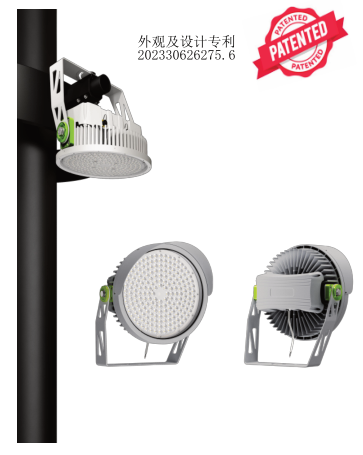
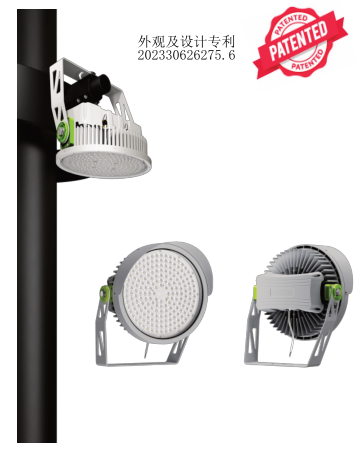
The FORTOMO 41SL is a high-output LED sports light available in 300W, 400W, and 500W configurations, delivering 45,000–75,000 lumens with luminous efficacy of 150–170 lm/W .
For a Metal Halide to LED tennis court retrofit , fixture wattage should not be selected based solely on the existing Metal Halide lamp. Pole height, court dimensions, fixture positions, target illuminance, and required uniformity should be evaluated through a professional photometric calculation.
Low-Glare LED Lighting for Tennis Courts
Glare can affect players' ability to track a fast-moving tennis ball, particularly when fixtures are positioned within the players' field of view. The 41SL is designed with UGR <19 and no-flicker operation to support comfortable visual conditions for sports applications.
Beam selection is also important for controlling unwanted light. The 41SL offers NEMA2–NEMA6 optics and beam angles from 7° to 45° , including 7°, 15°, 25°, 35°, and 45° options.
Narrower beams can concentrate light from higher mounting positions, while wider distributions can provide broader coverage where appropriate. Correct optical selection can help direct illumination toward the court and reduce unnecessary spill.
41SL Features for Metal Halide Replacement
The 41SL uses a durable aluminium housing with an airflow-based thermal design for outdoor sports lighting. IP66 protection helps protect the fixture against outdoor environmental conditions, while optional 10kV/20kV surge protection provides additional protection for demanding installations.
The fixture also supports 0–10V, PWM, DALI, and DMX512 controls, allowing the lighting system to be integrated with different dimming and control requirements.
Key 41SL Specifications
- 300W, 400W and 500W configurations
- 45,000–75,000 lm output
- 150–170 lm/W luminous efficacy
- UGR <19
- NEMA2–NEMA6 optics
- 7°, 15°, 25°, 35° and 45° beam options
- IP66 protection
- 10kV/20kV surge protection options
- 3000K–6000K CCT options
- 0–10V, PWM, DALI and DMX512 controls
- Up to 100,000 hours rated life
- 360° adjustable mounting
- Removable driver box
Global Tennis Court LED Retrofit Projects
A successful low-glare tennis court lighting upgrade should balance visual comfort, uniformity, energy efficiency, and optical control. The 41SL's multiple power levels and beam options allow contractors, distributors, and lighting designers to adapt the fixture to different court layouts and existing Metal Halide installations.
For global sports lighting projects, the 41SL provides a flexible solution for LED tennis court retrofits, Metal Halide replacement, training facilities, and multi-sport venues .