Long-Term LED Sports Floodlight Supply For Metal Halide Retrofit Projects
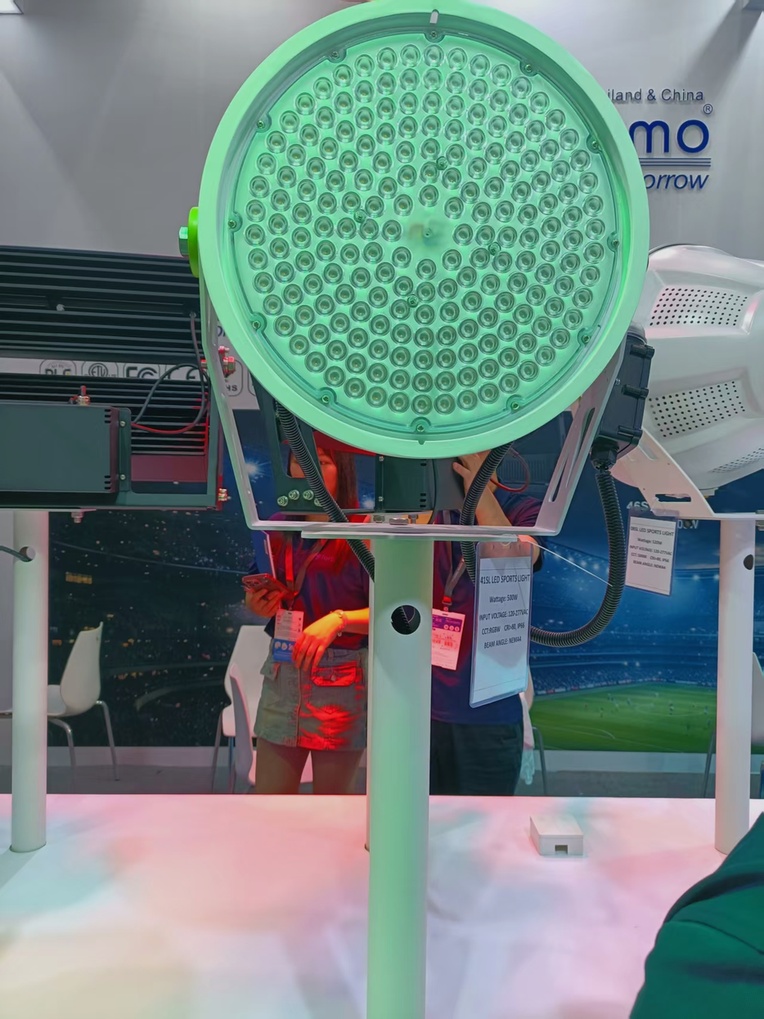
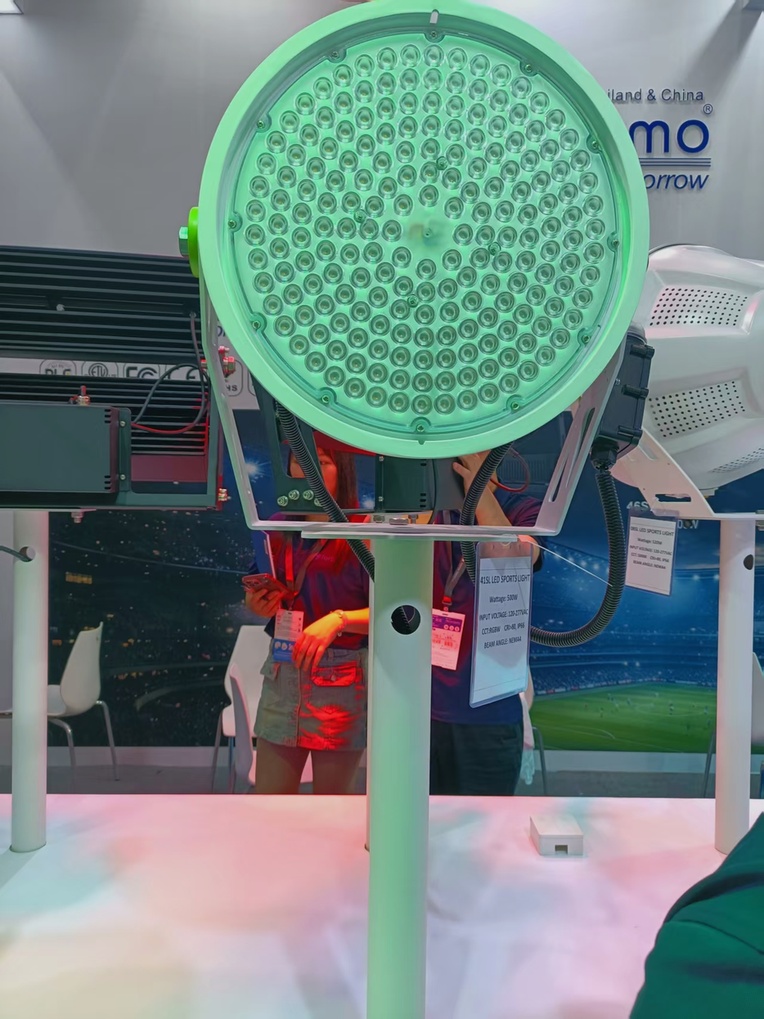
Replacing metal halide sports lighting with LED is increasingly considered when stadiums and sports facilities need lower maintenance, improved energy efficiency and more flexible lighting control. For contractors, importers and project suppliers, a successful retrofit also requires stable product supply across multiple projects and consistent fixture specifications.
The FORTOMO 37SL LED sports floodlight is available in 600W, 800W, 1000W and 1200W , providing a high-power platform for large football grounds, stadiums, rugby facilities and other outdoor sports lighting projects.
600W–1200W LED Floodlights For Metal Halide Replacement
The 37SL offers four power options from 600W to 1200W , with a stated luminous efficacy of 150–170 lm/W . This allows contractors to select different outputs according to the existing mast arrangement, pitch dimensions and required lighting levels.
A professional retrofit should not simply replace an old metal halide lamp with an LED fixture of similar wattage. The new system should be designed according to:
- Existing pole height and position
- Pitch dimensions
- Required lux level
- Uniformity requirements
- Beam angle
- Existing electrical infrastructure
- Operating hours
Designed For Stadium Retrofit Projects
The 37SL uses a die-cast aluminium housing with an air-circulation design for heat dissipation. Its removable driver box can help reduce maintenance costs, while the quick-plug connection supports easier installation.
The fixture also has a 360° rotatable angle and low-EPA design, giving contractors greater flexibility when working with existing lighting columns.
This makes the 37SL suitable for retrofit projects where the objective is to upgrade the luminaires while retaining as much of the existing infrastructure as practical.
Flexible Optics For Existing Mast Layouts
Metal halide floodlights often use optical distributions that differ from modern LED sports luminaires. During an LED conversion, selecting the correct beam angle is therefore critical.
The 37SL supports 15°, 25°, 35° and 45° beam angles , corresponding to NEMA 2–6 options.
Narrower beams can be used for longer projection distances, while wider optics can provide broader coverage. A combination of optics can also be used where existing mast positions create different lighting distances across the pitch.
Lower Maintenance LED Sports Lighting
Long-term maintenance is an important consideration for stadium operators and contractors managing multiple sports facilities.
The 37SL has a stated 100,000-hour life , a 5-year warranty and a removable driver box.
Compared with conventional lamp-based systems, LED fixtures can also eliminate regular lamp replacement and provide instant-on operation. The 37SL is specified as instant-on and no flicker , supporting modern sports lighting applications.
Actual energy and maintenance savings depend on the existing metal halide system, operating schedule and final LED lighting design.
Smart Controls For Retrofit Projects
A stadium or sports ground may require different lighting levels for training, competition, cleaning and maintenance.
The 37SL supports 0–10V, PWM, DALI, DMX512 and Synapse control systems.
This provides contractors with options for integrating LED floodlights into new or upgraded lighting-control systems, subject to project compatibility.
Outdoor Protection For Long-Term Operation
The 37SL features a tempered-glass anti-UV lens , IP66 protection and an operating temperature range of -40°C to +45°C . Optional 10kV or 20kV surge protection is available for projects requiring additional electrical protection.
These specifications make the fixture suitable for outdoor stadium and sports field applications in different climates.
Stable Supply For Global Retrofit Projects
Long-term sports lighting projects often require more than a single shipment. Contractors and importers may need consistent specifications for multiple stadiums, replacement units, spare drivers and follow-up orders.
A product range with several wattages and optical options can simplify project sourcing. The 37SL provides 600W–1200W configurations, 150–170 lm/W efficacy, four beam angles, IP66 protection, smart-control compatibility and a 5-year warranty .
For sports lighting contractors, distributors and importers, this provides a flexible LED platform for metal halide replacement, stadium retrofit and long-term sports lighting supply projects worldwide .