How to Choose AS/NZS Compliant LED Stadium Lights for Community Grounds?
Community sports grounds need lighting that balances performance, energy efficiency, maintenance, safety, and project cost. For Australian projects, buyers should consider both the sports lighting requirements and the applicable electrical compliance requirements when selecting LED stadium lights.
1. Start With the Sports Lighting Requirement
The appropriate LED stadium light depends on the sport, playing level, field dimensions, pole height, and required illuminance.
Standards Australia identifies AS 2560.2:2021, Sports Lighting, Part 2: Specific Applications as guidance for different sports and levels of play, including football, cricket, tennis, netball, basketball, athletics-related facilities, and community sports venues.
A professional lighting design should therefore evaluate average illuminance, uniformity, glare, light spill, mounting height, and aiming angles rather than simply replacing an old fixture with the same wattage.
2. Select the Correct LED Sports Light
For community grounds, the fixture should provide sufficient output without unnecessary energy consumption.
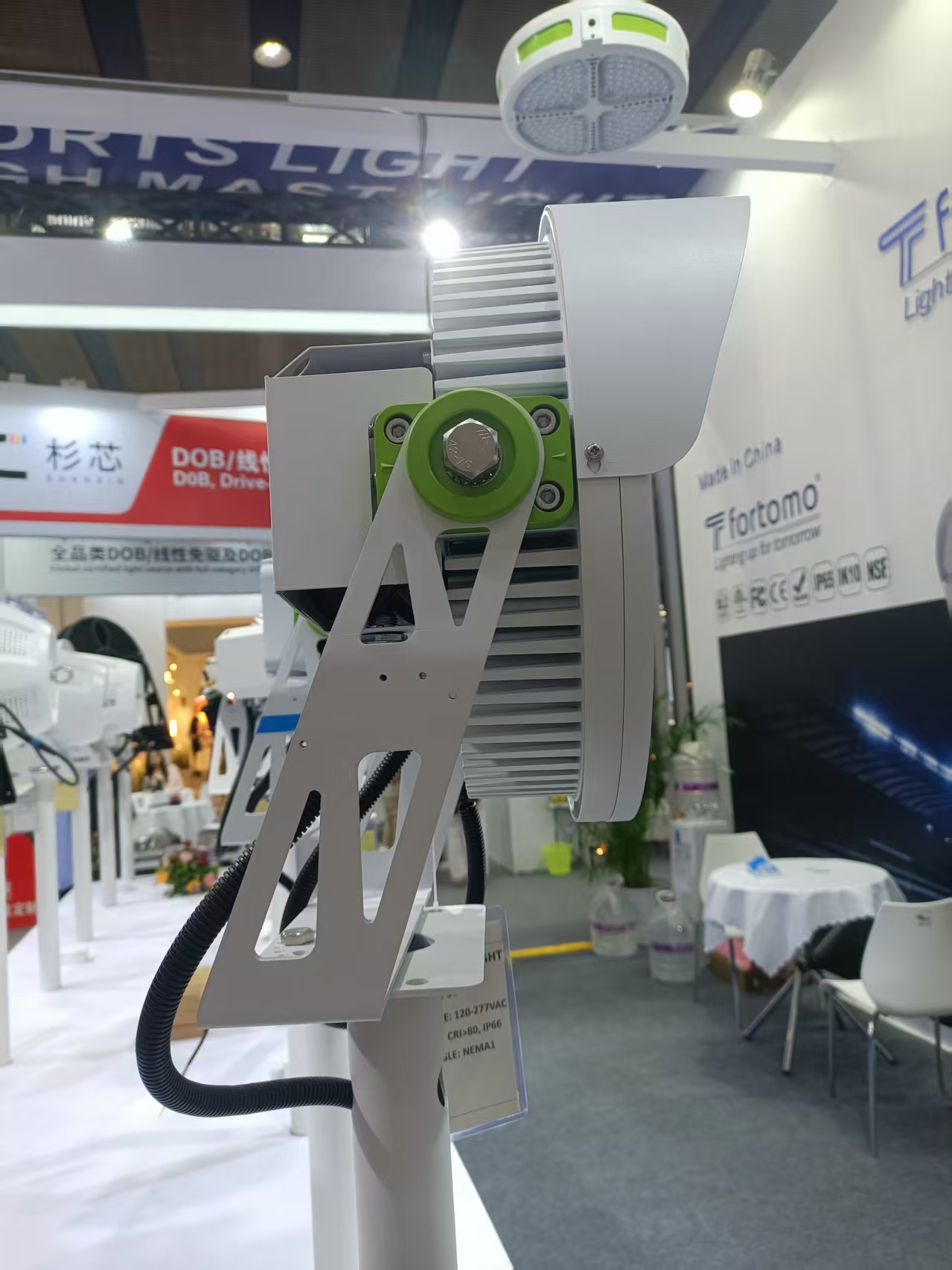
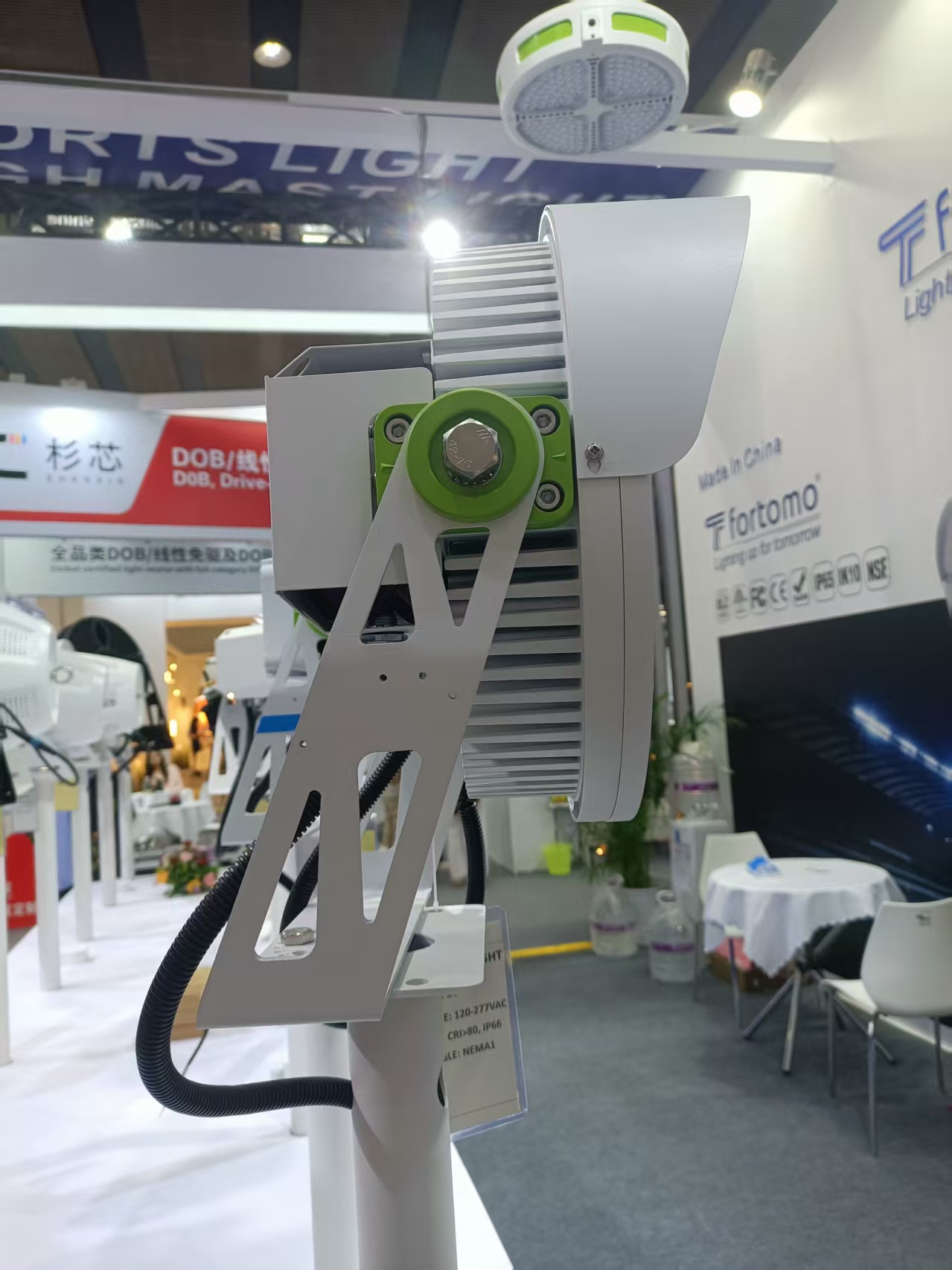
FORTOMO offers multiple LED sports lighting platforms for different project sizes. For example, the 41SL is available in 300W, 400W, and 500W , while higher-output models can be used for larger fields and high-mast installations.
Beam angle is equally important. Narrow optics can provide longer throw distances from higher poles, while wider optics can provide broader coverage. IES/LDT photometric calculations should be used to determine the appropriate fixture quantity and optical configuration.
3. Check Electrical Compliance
For Australian projects, compliance should be confirmed for the specific luminaire, driver, configuration, and intended application .
The RCM is part of Australia's electrical equipment compliance framework, while requirements can vary depending on equipment classification and applicable regulations. Energy Safe Victoria notes that suppliers of in-scope electrical equipment have responsibilities under the EESS, including applicable registration and RCM marking requirements.
Therefore, importers and contractors should request the relevant test reports, certificates, product specifications, driver information, and compliance documentation before ordering.
It is also important to distinguish between compliance with a standard and certification . Standards Australia states that it does not itself certify products; certification is performed by appropriate certification bodies.
4. Consider Outdoor Durability
Community grounds are exposed to rain, dust, UV radiation, temperature changes, and sometimes coastal or tropical conditions.
When selecting LED stadium lights, buyers should evaluate:
- IP protection
- Surge protection
- Housing material
- Thermal management
- UV resistance
- Operating temperature
- Driver reliability
- Corrosion protection
These factors become particularly important for high-mast installations and facilities operating for long hours.
5. Choose a Global Manufacturer
Although AS/NZS requirements are important for Australian projects, international buyers may have different certification and technical requirements.
For global distributors, importers, contractors, and sports lighting designers, working with a manufacturer that can provide different wattages, optics, control options, technical documents, and market-specific compliance support makes it easier to adapt the same product platform to different projects.
FORTOMO supplies LED sports lighting for community grounds, stadiums, football fields, cricket ovals, tennis courts, training facilities, and multi-sport complexes in international markets.
Key Selection Checklist
Before purchasing LED stadium lights for a community ground, confirm:
- Required illuminance and uniformity
- Sports and competition level
- Pole height and existing fixture positions
- LED wattage and lumen output
- Beam angle and optical distribution
- Glare and light-spill requirements
- IP and surge protection
- Applicable AS/NZS and local electrical requirements
- Test reports and compliance documentation
- Warranty and technical support
For Australian projects, AS 2560.2:2021 provides sports-lighting guidance, while electrical compliance should be assessed separately according to the applicable regulatory framework.
For projects outside Australia, the same selection principles can be adapted to local standards and tender requirements, making flexible LED sports lighting a practical solution for global community sports facilities .