
How Many LED Tennis Court Lights Are Needed for a Full-Size Court?
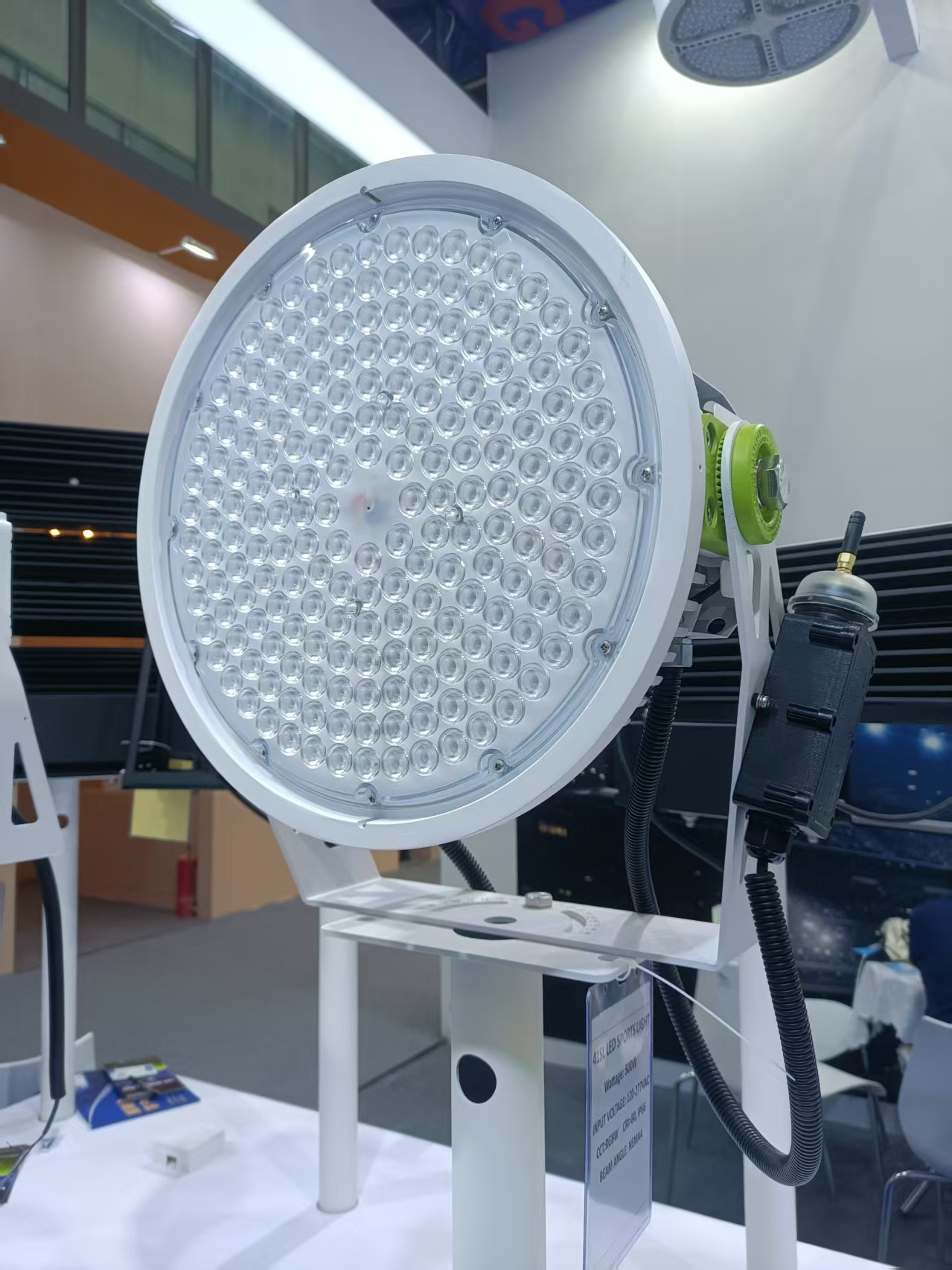
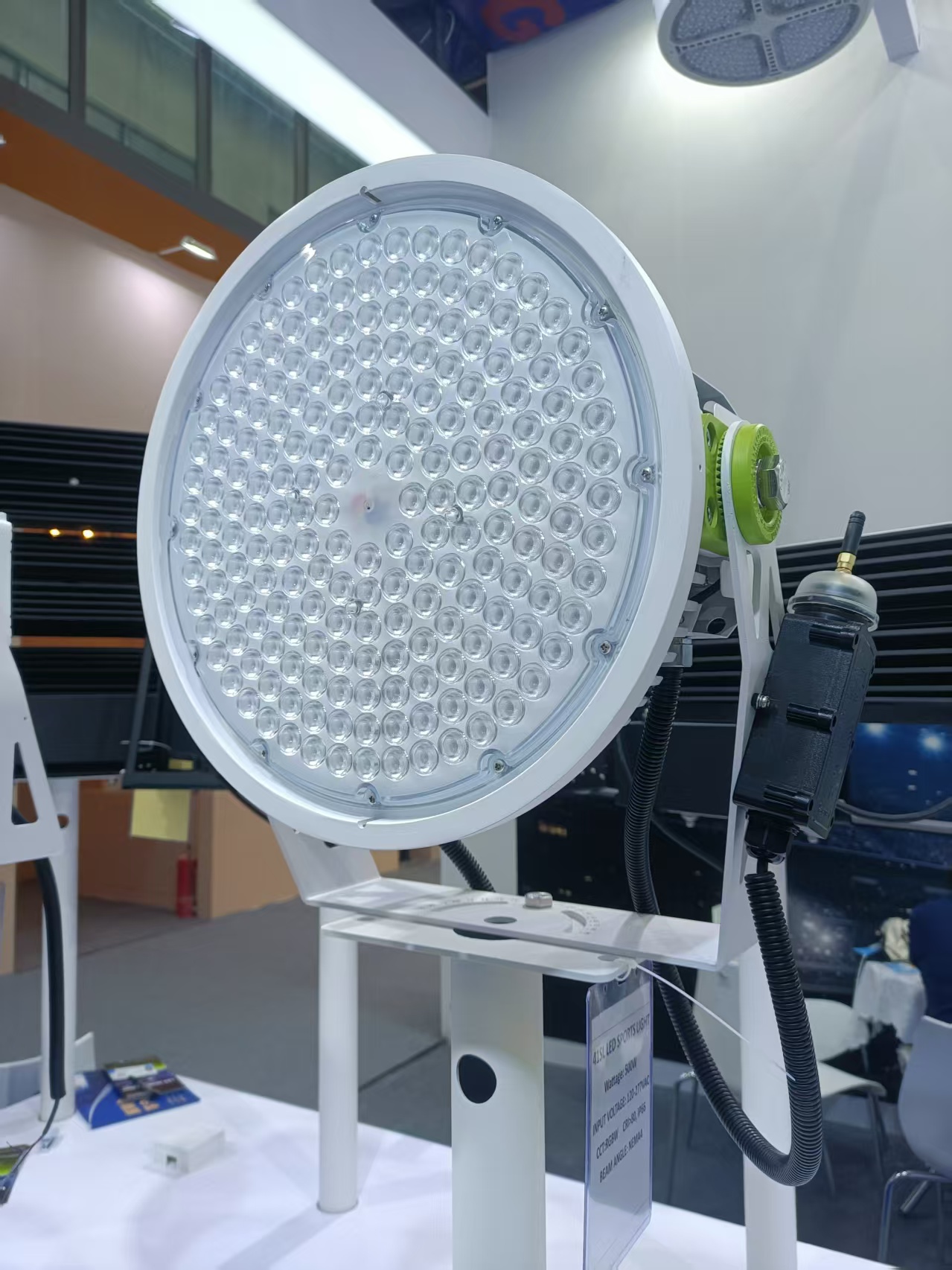
The number of LED tennis court lights required for a full-size court depends on the target illuminance, mounting height, fixture output, beam angle, pole positions, and required uniformity. There is no single fixture quantity that suits every court, so professional photometric calculations should be completed before installation.
41SL for Full-Size Tennis Courts
The FORTOMO 41SL is available in 300W, 400W, and 500W configurations, producing approximately 45,000–75,000 lumens with up to 150–170 lm/W efficacy.
For a private or recreational full-size tennis court, a design target of around 250 lux average illuminance is commonly used, while professional facilities may require higher lighting levels. Uniformity should also be considered to avoid dark areas across the playing surface.
How Many Fixtures Are Needed?
A typical full-size tennis court may use several LED sports lights mounted on poles around the court, but the exact number depends on the installation layout.
With the 41SL, designers should evaluate:
- Court dimensions and surrounding areas
- Pole height, commonly around 6–8 m
- 300W, 400W, or 500W output
- Beam angle and optical distribution
- Required average illuminance
- Lighting uniformity
- Glare and light spill
- Existing pole positions for retrofit projects
Rather than selecting fixtures based only on lumen output, an IES/LDT photometric simulation can determine the appropriate fixture quantity and aiming angles.
Choosing the Right 41SL Optics
The 41SL supports 7°–45° beam angles , including 7°, 15°, 25°, 35°, and 45°, with NEMA2–NEMA6 optics.
For higher mounting positions or longer throw distances, narrower beams may be suitable. Wider optics can provide broader court coverage when fixtures are positioned closer to the playing area.
The 41SL can also achieve UGR <19 , helping control glare and improve visual comfort for players.
Key 41SL Features
- 300W / 400W / 500W
- 45,000–75,000 lm
- 150–170 lm/W
- 7°–45° beam options
- NEMA2–NEMA6 optics
- UGR <19
- IP66 protection
- Optional 10kV/20kV surge protection
- 3000K–6000K CCT
- 0–10V, PWM, DALI and DMX512 controls
- Adjustable mounting
Full-Size Tennis Court Lighting for Global Projects
For tennis court lighting projects in Australia and other international markets, fixture quantity should be determined according to the applicable lighting standard and project requirements.
The 41SL provides a flexible solution for private tennis courts, tennis clubs, training facilities, residential courts, and professional sports venues . Its multiple power levels and beam angles allow lighting designers to configure the system according to different court layouts and mounting conditions.