
Wind-Resistant LED Sports Lights for Global Projects | AS/NZS 1170.2 Applications
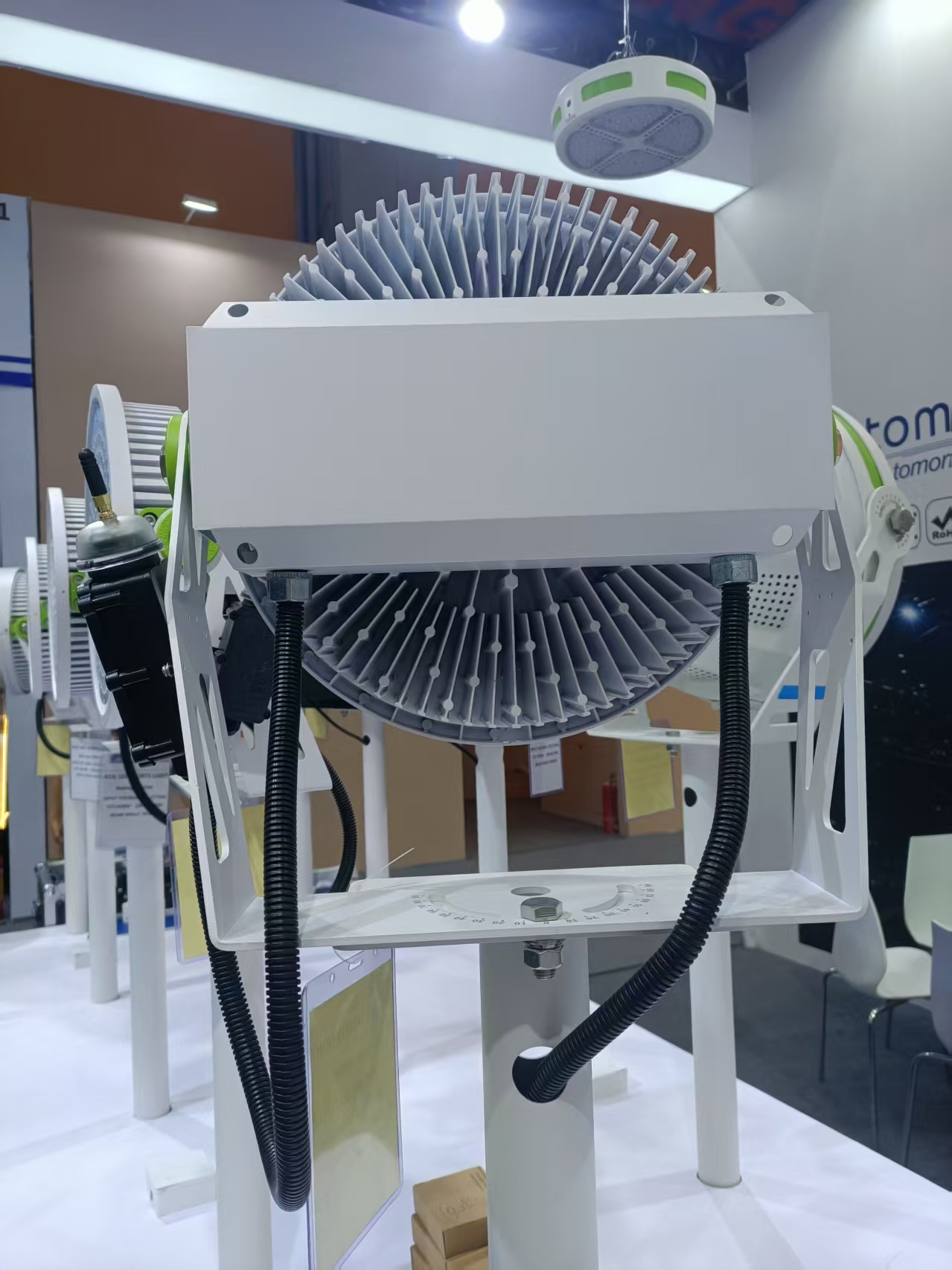
Sports lighting installed on tall poles can be exposed to strong winds, especially at coastal sites, open sports grounds, and large stadiums. For these projects, LED sports lights should be selected together with pole structure, mounting brackets, wind loading, and local engineering requirements.
41SL for High-Wind Sports Facilities
The FORTOMO 41SL is a high-output LED sports light available in 300W, 400W, and 500W configurations, delivering approximately 45,000–75,000 lumens with up to 150–170 lm/W efficacy.
Its compact sports-lighting design and adjustable mounting make it suitable for tennis courts, football fields, cricket grounds, stadiums, and other outdoor sports facilities.
For high-wind installations, the complete lighting system should be evaluated, including fixture dimensions, mounting orientation, brackets, poles, and site-specific wind conditions.
AS/NZS 1170.2 and Global Projects
AS/NZS 1170.2 is relevant to wind actions for structures in Australia and New Zealand. Whether a particular LED sports lighting installation needs to demonstrate compliance with this standard depends on the overall engineering design and project requirements.
For projects outside Australia and New Zealand, wind loading should be assessed according to the applicable local structural standards.
Therefore, lighting designers and contractors should confirm wind-load requirements before specifying fixtures for high-mast or exposed locations.
Optical Control for Outdoor Sports
The 41SL supports 7°–45° beam angles , including 7°, 15°, 25°, 35°, and 45°, with NEMA2–NEMA6 optical options.
Narrow beams can help project light over longer distances from high mounting positions, while wider beams provide broader coverage. Photometric calculations can determine the appropriate optics, fixture quantity, and aiming angles for each sports field.
Durable Outdoor Design
The 41SL provides IP66 protection for outdoor environments and can be equipped with optional 10kV/20kV surge protection . It also supports 0–10V, PWM, DALI, and DMX512 control systems.
Key 41SL Features
- 300W / 400W / 500W
- 45,000–75,000 lm
- 150–170 lm/W
- 7°–45° beam options
- NEMA2–NEMA6 optics
- IP66 protection
- Optional 10kV/20kV surge protection
- UGR <19
- 3000K–6000K CCT
- Multiple control options
- Adjustable mounting
LED Sports Lighting for Global Projects
For high-wind stadium and sports facility projects, wind resistance should be considered as part of the complete lighting and structural design rather than as a fixture specification alone.
The 41SL provides a flexible solution for global LED sports lighting projects , including exposed sports grounds, stadiums, tennis facilities, football fields, and high-mast installations.