Cost-Effective LED Sports Lighting Retrofit for Community Sports Clubs
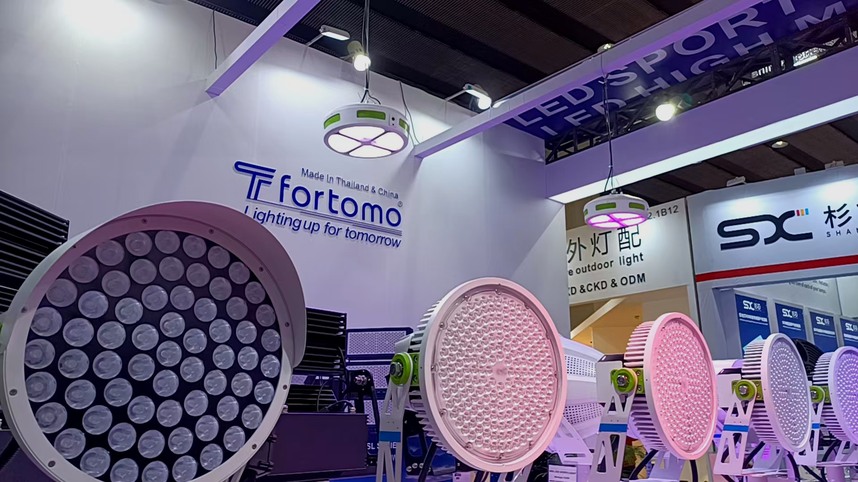
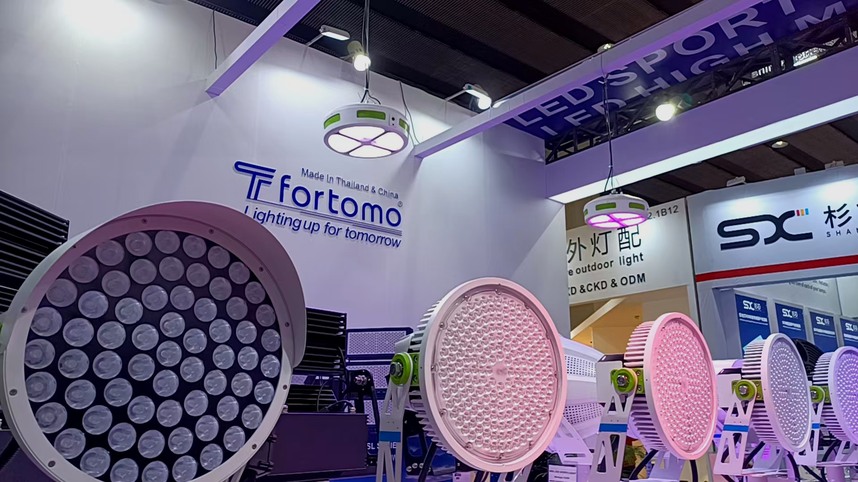
Community sports clubs often need reliable field lighting without the high energy and maintenance costs associated with older Metal Halide systems. A well-planned LED sports lighting retrofit can provide better illumination, lower operating costs, and longer service life while making existing sports facilities easier to manage.
LED Retrofit for Community Sports Facilities
For smaller football fields, tennis courts, training grounds, and multi-sport facilities, choosing the right LED wattage is important for controlling project costs. Instead of simply installing the highest-power floodlight, the lighting system should be designed around pole height, field dimensions, required illuminance, beam angle, and uniformity.
The FORTOMO 41SL is available in 300W, 400W, and 500W configurations, producing up to 75,000 lumens. With luminous efficacy of 150–170 lm/W, it provides an efficient solution for community sports club lighting upgrades .
41SL LED Sports Light for Cost-Effective Upgrades
The 41SL offers multiple optical options, including NEMA2–NEMA6 and 7°, 15°, 25°, 35°, and 45° beam angles. This flexibility allows contractors to select suitable light distribution according to mounting height and sports field layout.
For a Metal Halide to LED sports lighting retrofit , selecting the correct beam angle can help reduce wasted light and improve uniformity across the playing surface. The 41SL also provides UGR <19, instant-on operation, and no-flicker illumination for comfortable sports activities.
Lower Maintenance and Long-Term Value
The 41SL uses a high-heat-conductivity die-cast aluminium housing with an airflow-based cooling design. Its removable driver box can simplify maintenance, while the quick plug connection helps make installation more convenient. The fixture is IP66 rated for wet, damp, and dry locations and has a rated life of up to 100,000 hours.
Key specifications include:
- 300W, 400W and 500W options
- 45,000–75,000 lumen output
- 150–170 lm/W efficacy
- NEMA2–NEMA6 optics
- 7°–45° beam options
- IP66 protection
- 10kV/20kV surge protection options
- 3000K–6000K CCT and optional RGBW
- 0–10V, PWM, DALI and DMX512 controls
- 100,000-hour rated life
- 5-, 7-, and 10-year warranty options
Practical LED Lighting for Community Clubs
A cost-effective LED sports lighting upgrade is not simply about selecting the lowest fixture price. Energy consumption, maintenance, optical performance, installation requirements, and expected service life should all be considered.
With three power options and flexible beam distributions, the 41SL provides a practical platform for community sports club LED lighting , Metal Halide replacement projects, and smaller outdoor sports facilities. Professional photometric calculations can help determine the appropriate fixture quantity and configuration for each project.